

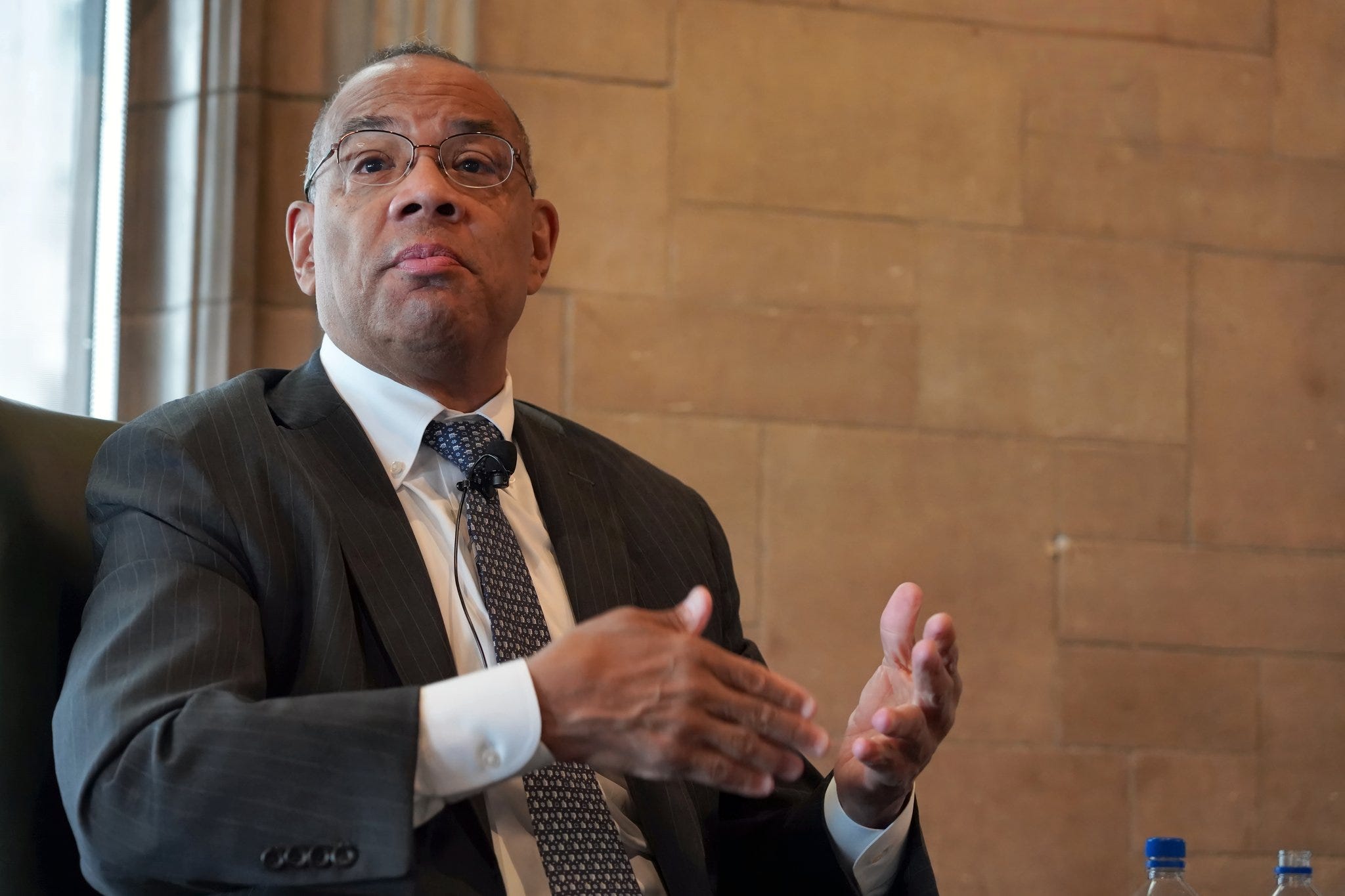
How do you learn to buy when everyone else is selling? John W. Rogers, Jr., who founded Ariel Investments over four decades ago under the motto “slow and steady wins the race,” opened the second day of Latticework 2026 in Chicago by arguing that the temperament can be learned: from a university that prizes independent thinking, a basketball coach who taught him that the predictable play is easy to guard, and a book that shows “how people lose their minds when fear grips them.” His warning for today’s market: “it’s more difficult to be patient than ever, but I think it creates opportunity.”
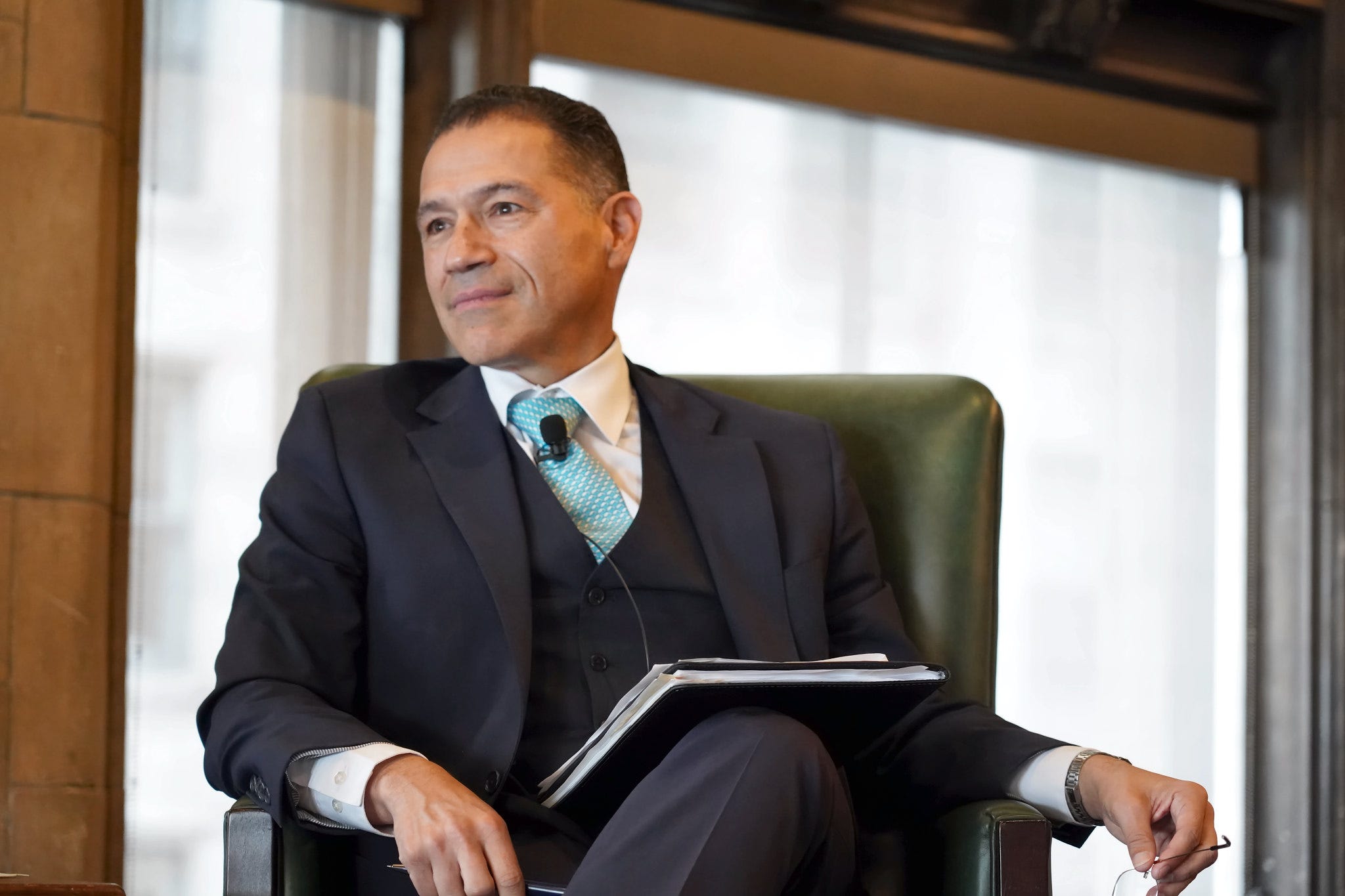
Rogers founded Ariel in Chicago in 1983, at 24, to invest patiently in small and medium-sized companies, and leads it as Chairman, Co-CEO and Chief Investment Officer. W.D. (Daniel) Vasquez, Chairman and CEO of W.D.Vasquez & Co., an economic advisory and investment counsel firm in San Francisco, opened on Veterans Day by asking the veterans in the room to stand, then took Rogers through temperament, discipline, value traps, and the sell decision before opening the floor.
Contrarian temperament can be learned
Rogers traces his ability to stand alone in a panic to four things: where he grew up, how he grew up, a coach, and the history of manias. Growing up in Hyde Park, around the University of Chicago, taught him to think for himself rather than follow the crowd. As an only child of two professional parents, he was left to figure things out on his own and “ended up with a lot of quirky traits, which I think a lot of money managers are.” At Princeton, his basketball coach, Pete Carril, preached thinking differently:
He always used to say, if you do what everyone expects you to do, it’s easy to guard.
The fourth was Burton Malkiel’s A Random Walk Down Wall Street. Though it is a book about efficient markets, Rogers said, it also tells the history of the Nifty Fifty, 1929, and the South Sea bubble, showing “how people lose their minds when fear grips them or they get too excited, and bubbles last longer than you can ever anticipate.” Add Buffett’s “be greedy when others are fearful” and Templeton’s “maximum pessimism,” and he had the confidence to buy in 1987 and again in 2008 and 2009.
Volatility is your friend, especially now
Stocks now fall faster on small disappointments than at any time in Ariel’s 44 years, Rogers said, and that is where the opportunity lies. Financial television sells drama, and a friend said any slightly disappointing earnings report now knocks a stock down 20% “right off the bat.”
It’s more difficult to be patient than ever, but I think it creates opportunity.
When a headline brings in short sellers and algorithms, stocks stop trading on fundamentals for a while. Ariel uses those moments to add to favorite holdings and to start positions in companies it has watched for a long time. The worst response, he said, is to treat volatility as something to fear, or to jump on the bandwagon when everyone else does.
Guard against value traps with one question
The question Ariel spends the most time on is whether a company will still lead its industry 10 or 15 years from now. Rogers did not claim originality: Ariel wants the companies with the largest moats, where it would be “very difficult for new competitors to come in and challenge one of our companies.” He gave one example of a moat he expects grandchildren to benefit from, which paid members hear below.
He also credits behavioral finance, and two of its Nobel laureates he came to know, Richard Thaler and Daniel Kahneman, for help with the discipline that matters most when a value stock disappoints. In his words, “the hardest thing to do in this business is sell your losers.”
Three reasons to sell
Ariel sells when the discount is gone, when management loses its plan to win, or when management buys businesses outside its circle of competence. Ariel aims to buy at a 40% discount to private market value, checked against discounted cash flows, competitors’ valuations, and conversations with management, and starts to scale out of a holding once the discount closes. Because value managers often buy companies “that have a cloud over them,” Ariel talks to every company every quarter to see whether the CEO and CFO still believe in their plan to win and are making progress.
The third trigger is capital allocation. Too many companies, when growth slows, cannot help buying businesses unrelated to their core, and Rogers reads that as a signal:
It’s a true signal when managements buy companies that are not in their circle of competence: that means they don’t have confidence in their core business.
Ariel tells management teams in advance that it will sell if they do, because, he said, “90% of the time, these transactions don’t work.”
Diversity as a talent pipeline
Asked for an example of diversity improving decisions, Rogers answered with the story of how he found his co-CEO. He met Mellody Hobson while recruiting minority students for Princeton; she had never thought about a career in money management. After a summer at Ariel, Rogers placed her for the next summer at T. Rowe Price, whose management had told him they could not find diverse candidates, and the friendships she made there have served Ariel ever since. Hobson has now been with Ariel 35 years.
Creating an environment that’s welcoming to everyone helps you find great talent.
How to build a firm that lasts
Stretch to hire talent you cannot yet afford, let the founder focus on investing, and stay committed to your craft through bad stretches. Early on, Rogers said, “I was always willing to stretch and hire someone talented that maybe we couldn’t afford.” With Hobson running the non-investing side of the business, he could focus on investing, a discipline many founders lack. Ariel’s internship program has produced several of its top people. And for its first 30 years, Ariel offered only small- and mid-cap value, so clients could see “how committed you are to your craft” even when performance lagged. The 2008-09 crisis, he said, was “an existential crisis we didn’t want to replicate,” which led Ariel to add international, global, and alternatives teams.
He closed on relationships: “you work at it, find somebody who knows somebody who can set up the meeting,” and over the years you will have great investors to call in a crisis. And he urged active managers to defend their craft against the story that they are lazy fee collectors: “I think we’ve allowed that narrative to happen, and we’ve got to fight back harder.”
Below the line
Paid members get the specifics from this session:
The moat Rogers expects grandchildren to benefit from, in the middle of Midtown Manhattan
Where he sees misunderstood value: cruise lines and their suppliers, washed-out consumer staples, health care tools, dental, and financials
Why he thinks private equity is not dead, and which firms he thinks are well positioned
His answer to a question about what Ariel owns that Buffett would not, from sports teams to the Sphere
Why Ariel avoids activism, and how that wins access to management
~44 minutes of audio, the key segments as 12 short clips you can play on their own, and the transcript with a typeset PDF
Paid members hear every Latticework 2026 session in full, with transcripts.


