

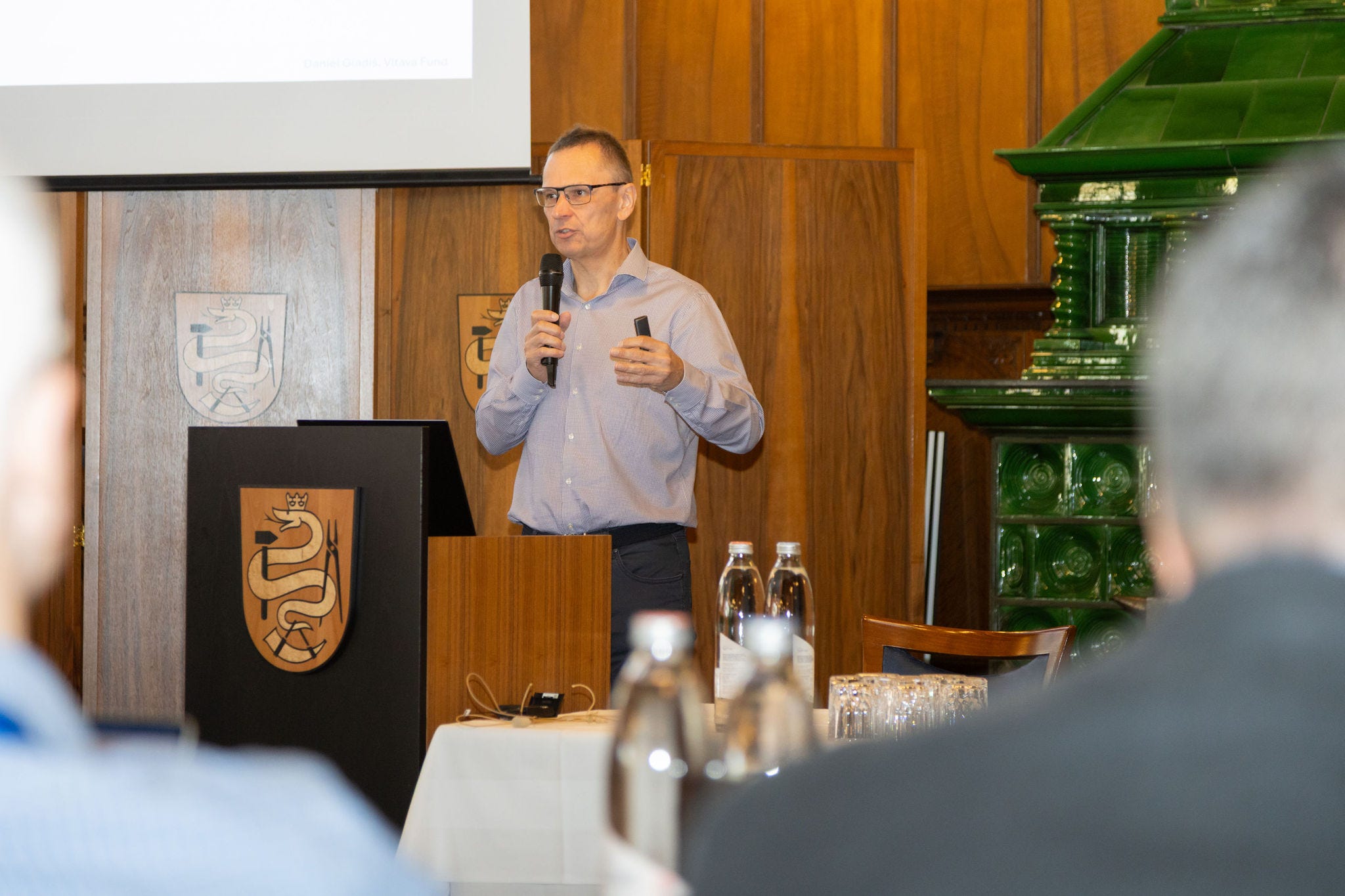
We were glad to welcome Daniel Gladiš of Vltava Fund back to the Zurich Project, where he has been a valued participant for many years. We are grateful to Daniel for once again sharing his thinking so openly with the group. Zurich Project proceedings are confidential by default, but with Daniel’s approval we are pleased to share his talk with you.
Daniel founded Vltava Fund in 2004 and has managed it ever since, having been an active stock investor since the early 1990s. He is the author of three books on investing, most recently the highly recommended Hidden Investment Treasures (John Wiley & Sons, 2025). He writes and speaks with unusual clarity about how a long-term investor should actually think, and his remarks in Zurich are no different.
Daniel asks a key question: If intelligence becomes abundant, what becomes scarce? His answer is that AI will not eliminate investing edge. It will relocate it. Scarcity is where value migrates, and machine intelligence is commoditizing the tasks that once conferred advantage, including gathering data, summarizing, screening, transcribing, and building first-pass models. What it does not commoditize is judgment applied under uncertainty.
He develops the case across five points. First, intelligence is getting cheaper while judgment is not; when answers become cheap, the value of asking the right question rises. Second, informational edge shrinks, while interpretive edge, i.e., understanding what the information means, grows. Third, the real danger is not that AI outthinks us but that it standardizes thinking, as shared tools and similar prompts push investors toward consensus, crowding, and fragility; that paradoxically widens the opening for genuinely independent thinkers. Fourth, temperament and time horizon become scarce assets, so as others grow more reactive, the premium on duration of thought, and on time arbitrage, rises. Fifth, AI sharpens analysis of the obvious but struggles with the obscure, so the best opportunities increasingly sit where machines are least comfortable, in situations that are messy, underfollowed, thinly covered, and culturally specific. In the spirit of his latest book, abundant intelligence may not kill hidden investment treasures. It may make them more hidden in some ways, and more valuable.
Daniel closes on a deeper definition: investing is the art of making sound probabilistic judgments about long-duration cash flows in a social system distorted by incentives, narratives, reflexivity, and emotion. He draws on Soros on reflexivity, and on a conversation with Garry Kasparov about why machines master chess yet may still struggle with markets, where neither the rules nor the goal are fixed.
The full session deserves a careful listen. The Q&A covers why large, widely followed companies still throw off major opportunities, how to avoid the trap of being too early, and precisely how AI has, and has not, changed the way Daniel runs Vltava. Listen to the replay, download the slides, and read the transcript below.
Transcript
The following is an edited and condensed transcript of the session.

Investor letter
Daniel’s latest letter to investors addresses the same topic.
Slides
Listen to this episode with a 7-day free trial
Subscribe to Latticework by MOI Global to listen to this post and get 7 days of free access to the full post archives.


