

We held our fifth bi-monthly member call yesterday, with members joining from both sides of the Atlantic. With the AI trade absorbing so much attention, a common thread ran through the hour: many participants are playing defense, finding value in neglected corners while asking how the AI spending cycle might unwind. We closed by discussing how members use AI in their own research.
For those who couldn’t join us, here is a synthesis of the key insights and thesis highlights shared by our community of intelligent investors.
This post summarizes views expressed by participants on an MOI Global member call and is provided for informational and educational purposes only. Nothing here is investment advice, nor a recommendation or solicitation to buy or sell any security. Speakers may hold positions in the securities discussed, and figures cited were stated on the call and have not been independently verified. Please do your own research and consult a qualified adviser before making any investment decision.
AECOM: a sound engineering franchise working through a legacy issue
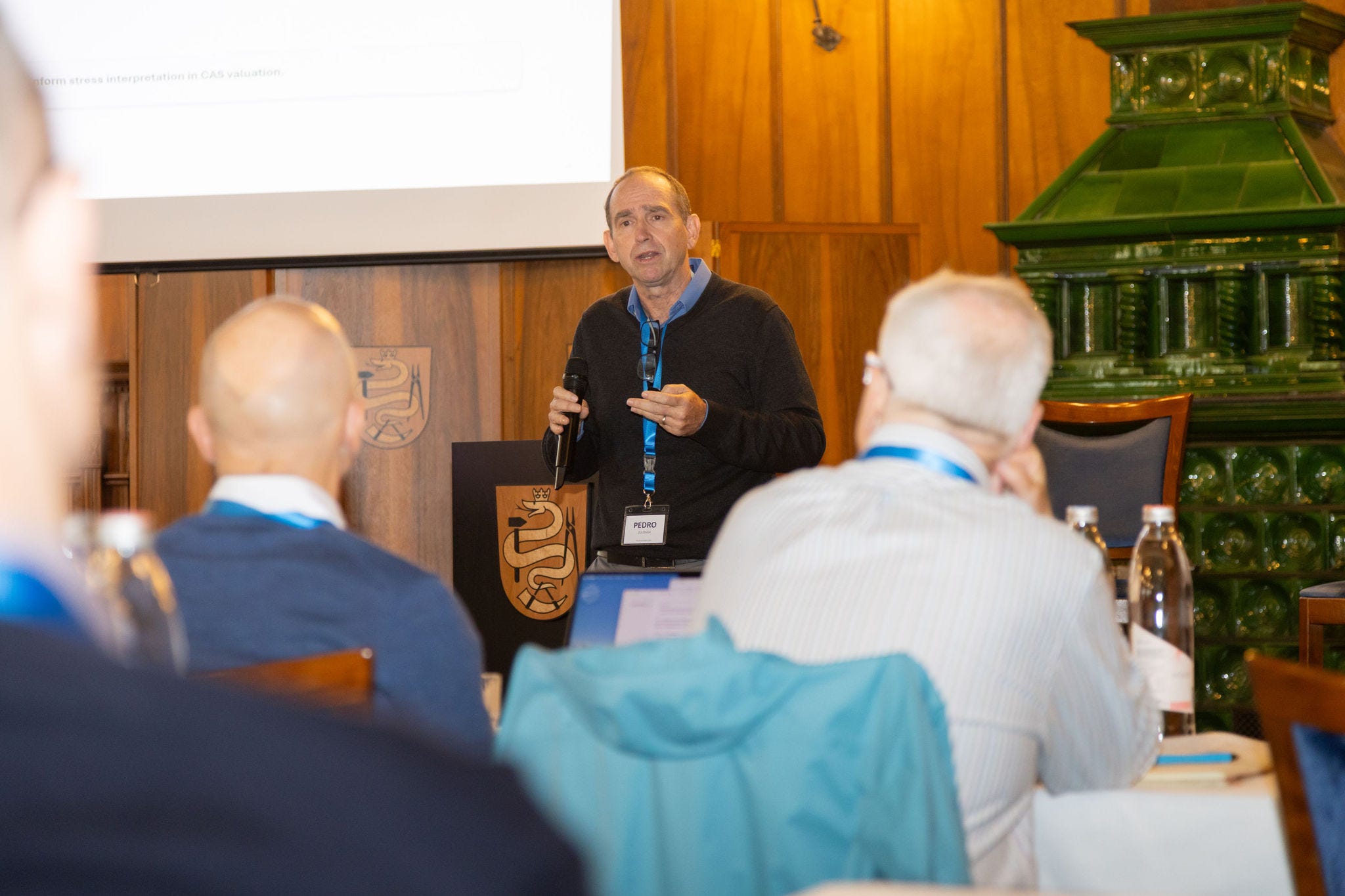
Pedro Zuloaga described AECOM (US: ACM) as a sound business working through a temporary legacy issue, and a cannibal that has reduced its share count since 2019. On AI risk, he noted that a bridge still needs a professional engineer to sign and seal the design, and that governments award major projects to firms with long records. Those moats look intact, and AI may even help by reducing the hours a job requires. On normalized earnings of six to seven dollars per share at 12 to 13 times, he sees value in the 90s, against a share price just below 60. Asked by Bill Coleman, Pedro said AECOM is primarily a US business, and suggested focusing on net service revenue, since reported revenue includes pass-through costs.
Japan’s household rotation and the chip equipment makers
Daniel Gladiš sees one macro shift positively: after a generation of near-zero rates, Japanese households are moving out of cash into bonds that now yield something and into equities, and new interest income should support consumption.
Huy Nguyen, joining us for the first time, focuses on the Japanese equipment makers behind AI, such as Tokyo Electron (Japan: 8035) and Disco (Japan: 6146), which supply every foundry regardless of who designs the chips. Disco, which Huy visited two months ago and considers one of Japan’s best-run companies, holds more than half the market for the precision dicing saws that cut finished wafers into individual chips. Long too expensive for him, it now trades at around 40 times this year’s earnings and in the mid-30s on his 2027 and 2028 estimates.
Adi Shyamsundar cautioned that little in AI and semiconductors looks cheap by value-investor standards, and suggested tracking what TSMC, Intel and Samsung say in case the cycle turns.
Samsara, four months on
Adi revisited Samsara (US: IOT), which he pitched in Zurich in June with the shares in the mid-30s. They now trade in the low 40s, and he remains constructive. Samsara keeps extending its devices and edge AI to anything that moves, most recently putting a device on the puck for the Canadian Hockey League. He sees a large market and competition that exists but is weak.
S&U: a UK consumer lender at an inflection point
Daniel previewed his European Investing Summit session on S&U (UK: SUS), which goes live on Friday, October 23. The family-run lender is a thinly traded UK small cap, away from passive flows. Two or three years of regulatory headwinds and tax increases are behind it, and a shift from bank borrowing to securitization, with two tranches secured, should let it grow faster with much less capital, toward a plan to double the business in about five years. The shares trade at a single-digit multiple and below book value.
Germany, broken compounders, and out-of-favor sectors
Max Busch acknowledged the disillusionment many German investors feel toward their home market, but recalled how well Petrobras worked out when every Brazilian hated it. Vonovia (Germany: VNA) is on his list to revisit, and an AI-assisted screen for derated quality companies surfaced Fielmann (Germany: FIE), a good if boring business at a reasonable price. He thinks broken compounders could get interesting while everyone focuses on AI. Nike (US: NKE) trades at perhaps 12 times normalized earnings, and he has a hard time seeing the brand fail to recover.
Gas turbines and the long tail of service revenue
Barton Hooper sees an underappreciated story in gas turbines at Siemens Energy (Germany: ENR) and GE Vernova (US: GEV). After the overbuild of the early 2000s, turbine capacity at both remains well below late-1990s levels despite surging demand. Europe can no longer switch to coal when gas gets expensive, and in the US, solar and wind have replaced much of the dispatchable reserve margin coal once provided, straining grid reliability in regions such as PJM. AI demand pulled forward a crunch that had been expected around 2027 or 2028. Margins on new turbines have gone from roughly zero to around 30%, which Barton views as unsustainable, so he is waiting for pricing to ease. What should prove durable is the long tail of service margins.
Asked by Adi about Vertiv (US: VRT), Barton noted that data center suppliers carry open debates, such as liquid cooling or 800-volt DC power, where a case can be made either way. His broader lesson: when managers you greatly admire, such as Dave Cote and Larry Culp, take on difficult assets, pay attention.
CEWE: a defensive photo book leader with a cleaner portfolio
Kevin Durkin recapped his European Investing Summit presentation on CEWE Stiftung (Germany: CWC), Europe’s leader in photo books, with a market value a little under 900 million euros. Management focuses on return on capital, and demand tied to gifting, travel and family has proven resilient. Kevin does not see a multi-bagger, but at under six times EBITDA the stock is cheap and defensive.
Two transactions mark an inflection point. CEWE sold its struggling commercial online printing business to Cimpress at a gain, and is acquiring the Kodak Moments retail photo station business, which adds some 200 million euros of lower-margin sales, room for synergies, and a presence in North America and Australia. The dividend has risen for 17 consecutive years. The shares have gone nowhere for six or seven years, trade thinly, and depend heavily on the holiday quarter.
Playing defense in a melt-up
Wyatt Sparks described an extreme market: the IGV software index fell some 30% in the first four to five months of the year, then rose some 45%. Citing Michael Fritzell, he suggested writing down today’s heuristics, since those of five or ten years ago aged quickly. Fighting a melt-up is futile while the retail, buyback and pod-shop bids remain in place, and washouts tend to run longer than expected: Vonovia is some 20% cheaper than a month ago. Activist campaigns have gone public at quality businesses such as Solstice Advanced Materials (US: SOLS) and Flowserve (US: FLS), which Wyatt presented in Prague. Everyone, he observed, is playing their own form of defense.
How might the AI spending cycle unwind?
Adi then asked how the AI build-out might unwind over the next one to two years, and whether a break at a weak link such as OpenAI or Anthropic would mark the beginning of the end.
One view discussed: the internet proved enormously important and AI may prove more so, yet the internet still went through a severe bust, and with spending and borrowing on today’s scale a similar shakeout seems hard to avoid. After 2000, many genuine value stocks rose, so defensive holdings might later be rotated into AI beneficiaries at much lower valuations. Huy agreed but has yet to identify clear beneficiaries, and expects large language models to become a commodity, as DeepSeek and Moonshot suggest.
Barton pointed to a twist: in the dot-com bubble, investors thought the P was outrageous; today, many think the E is. Nvidia would not have traded at 14 times next year’s earnings in 1999. Debt-financed spending above late-1990s levels as a share of GDP reminds him of the shale boom: shortages until marginal demand stopped, then a slow collapse in prices.
Pedro observed that customers seem less locked in than the providers would like; he switched to Gemini late last year and to Claude this year. If that is widespread, the build-out could prove a prisoner’s dilemma. Daniel cited 2028 consensus net income of 62 billion dollars for SpaceX against a research note projecting 371 billion, for a company with perhaps 50 billion of revenue this year. Add up bottom-up forecasts for the largest companies, he argued, and there is not enough money around.
Using AI in the investment process
Pedro asked how members use AI in their investment process, a topic we may explore further on our next call. Adi’s advice: keep at it, use several platforms, ask each tool how it can help with your specific work, and instruct it to debate you. He refines five analytical lenses every three weeks. Another suggestion from the discussion: state the goal rather than asking what the model can do, then challenge the output by asking what a world-class version would look like.
We closed with Bill complimenting Daniel on his recent essay on the golden age of active investing, which Bill has shared widely since it led our latest Weekly Inspiration.
I found the call incredibly valuable and hope this summary provides a few worthwhile insights for your own capital allocation process.
Our next live call will be on December 15 at 2:00 pm ET. No formal registration is needed; simply click the following link at the scheduled time to join.