

Thank you to everyone who joined us in Chicago on November 10-11 for Latticework 2026, our first summit to run two full days. I am grateful to our speakers for their candor, and to the members who filled the University Club of Chicago with sharp questions from the first session to the last.
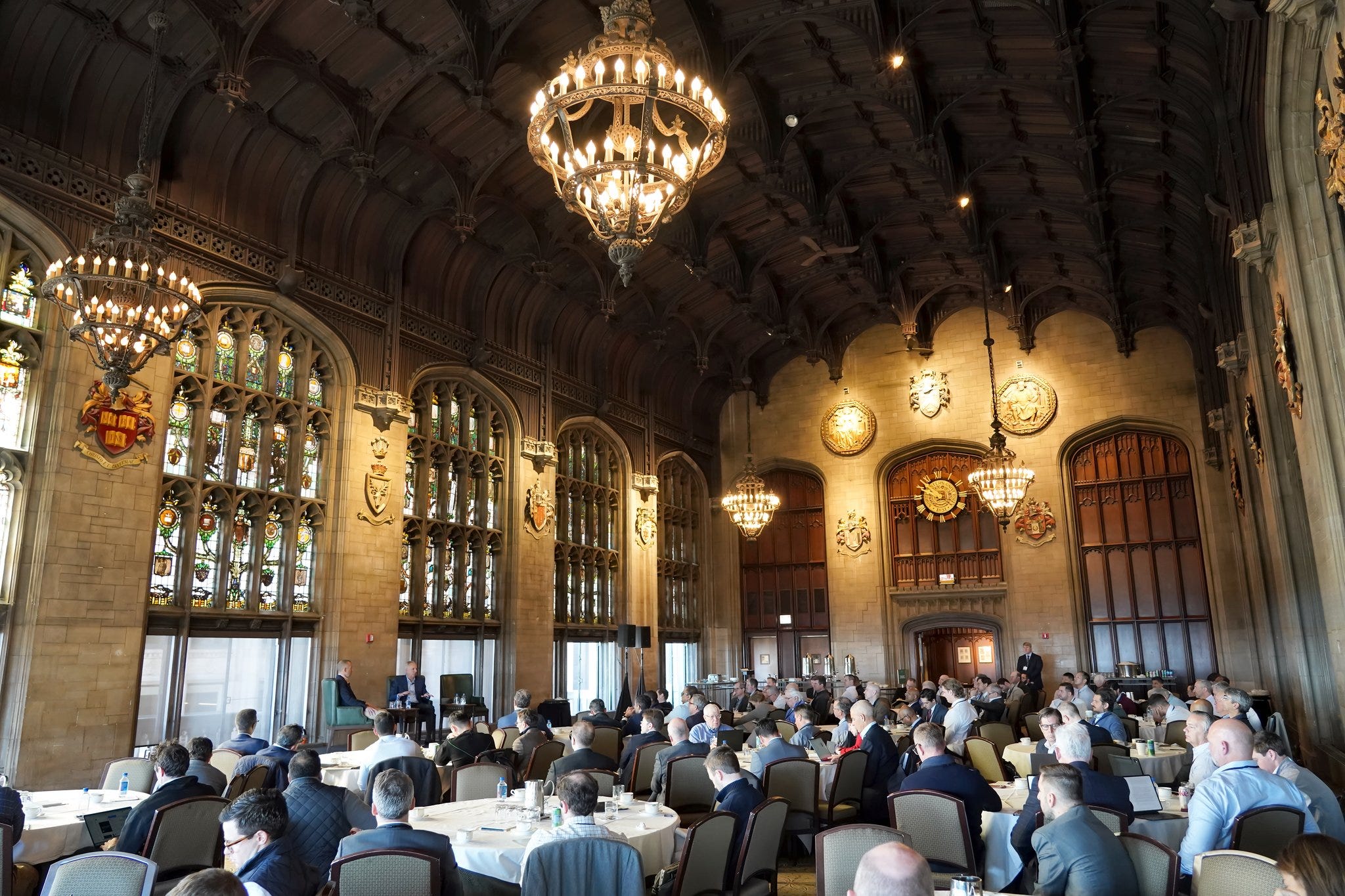
What follows is one idea from each session: a taste of the conversation, not a summary. Over the coming couple of weeks we will publish every on-the-record session as its own post, with an excerpt for all subscribers and the full audio and transcript for paid members.
Day one
A distributor’s margin is a reward for reliability. Christopher Tsai of Tsai Capital opened the summit in conversation with Mark Manduca, Chief Investment Officer of QXO. Manduca explained why building products distributors exist at all: they are “the glue between the manufacturer and the contractor,” in an industry where materials arrive late, wrong or broken about one time in four. A distributor that fixes that earns its margin.
The arithmetic of future returns is unforgiving. Chris Bloomstran of Semper Augustus ran his five-factor model on the S&P 500 live. For stocks to return 10.5% a year from here, “if you hold the margin constant with where we are today, you’ve got to take the multiple up to 45 times earnings.” He then applied the same discipline to the AI capital spending boom.
Long-horizon investing is not chess. Lucas Miller, a cognitive neuroscientist at UC Berkeley Haas, argued that AI’s “bitter lesson” — raw compute beats human expertise — holds where results can be scored quickly, and not in our line of work: “My claim today is the bitter lesson will not apply to long-horizon fundamental investing.” The edge moves to what machines cannot read.
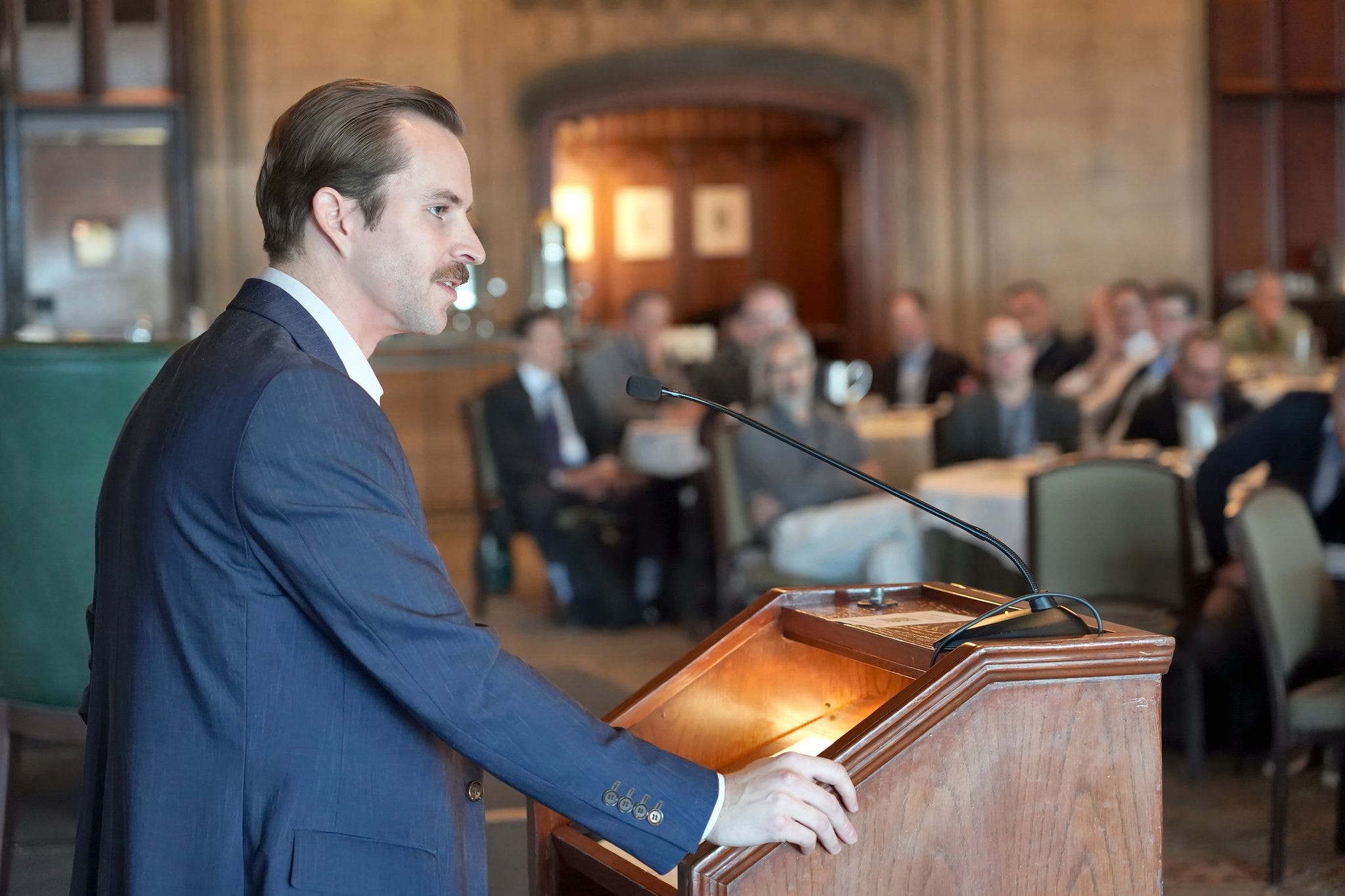
Buy ducklings at a duck’s price. On our small-cap value panel, Tim McElvaine of McElvaine Investment Management walked through his ABBA checklist (an Accident, a Bird in hand, a Brick house, Alignment) and his reminder that you need not buy swans: “the price I bought it at, I just need it to grow up and stay a duck.” Wyatt Sparks of Sea Meadow Capital and Mauricio Heck of Forterra Investment Management each brought a high-conviction idea of their own.
Exit on data, with a plan attached. John Kiernan, CEO of Alico, told Mike Melby of Gate City Capital how Alico left a 130-year citrus legacy as Florida’s orange crop fell from about 250 million boxes to under 11 million. The decision, he said, “purely was based on analytics,” and a quiet, acre-by-acre study meant the exit came with a plan for the land.
Twenty ideas before dinner. Day one closed with elevator pitches from the room, two minutes each: an Indian real estate developer, a Greek tobacco company, a trio of US community banks, a Japanese HR platform, and more. We collect every pitch in an Ideas from the Room post.
Day two
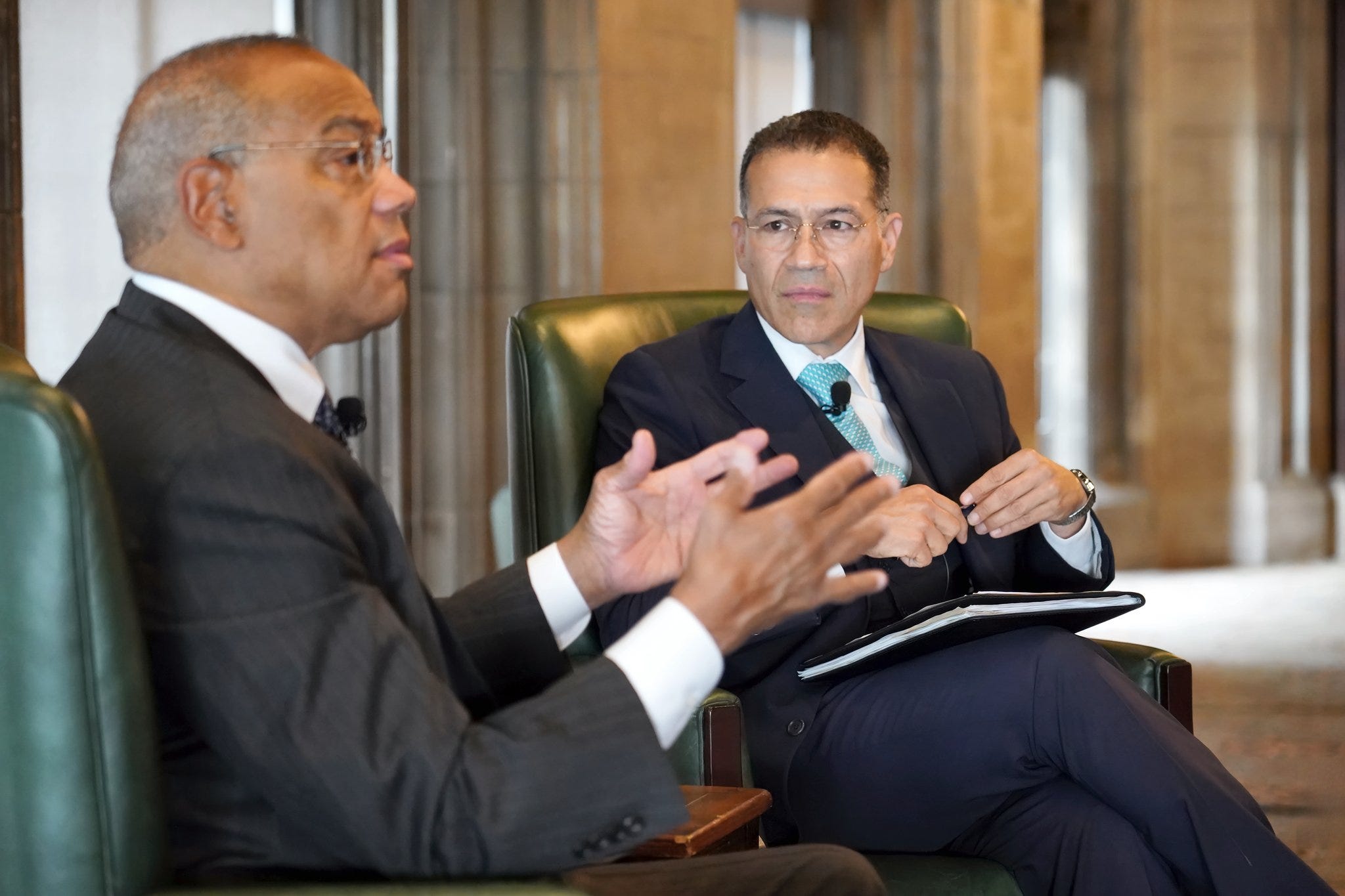
Patience is harder than ever, which is the opportunity. John W. Rogers, Jr., founder of Ariel Investments, told Daniel Vasquez of W.D. Vasquez & Co. that stocks now fall faster on small earnings misses than at any time in Ariel’s history: “So it’s more difficult to be patient than ever, but I think it creates opportunity.”
When there is no denominator, judgment matters more. Pat Dorsey of Dorsey Asset Management told Dave Sather of Sather Financial Group that in an asset-light economy, “return on invested capital becomes meaningless because there’s no denominator,” and that brands are far more ephemeral than they were 30 years ago.
Two out of three is a great record. François Rochon of Giverny Capital told Saurabh Madaan of Manveen Asset Management that “you have to accept that probably the best you can hope for is to be right two-thirds of the time.” He runs post-mortems on his successes too, including a great business he waited too long to buy.
Be a tax on the profit pool. Peter Mantas of Logos LP, in conversation with Elliot Turner of RGA Investment Advisors, offered a generalist’s map of healthcare: “The closer you are to being a tax on the profit pool of drugs, the better the business.”
Mining is a stock picker’s pond. Will Thomson of Massif Capital opened the copper panel with a statistic: beyond about 90 days, commodity prices explain only about 30% of mining equity returns. Al Fabbro of Midnight Sun Mining and Skott Mealer of Blue Moon Metals showed what explains the rest.
Twenty cents on the dollar, not fifty. Bob Robotti of Robotti & Company wants hard-asset businesses at 20 or 30 cents on the dollar of replacement cost, and the headline that scares others can be a signal: when lumber prices disappoint, “we get excited, because that means there’s going to be another four or five mills that are going to close.” J.Dennis Jean-Jacques added his perspective on managing volatility and boosting exposure when dislocation creates opportunity.
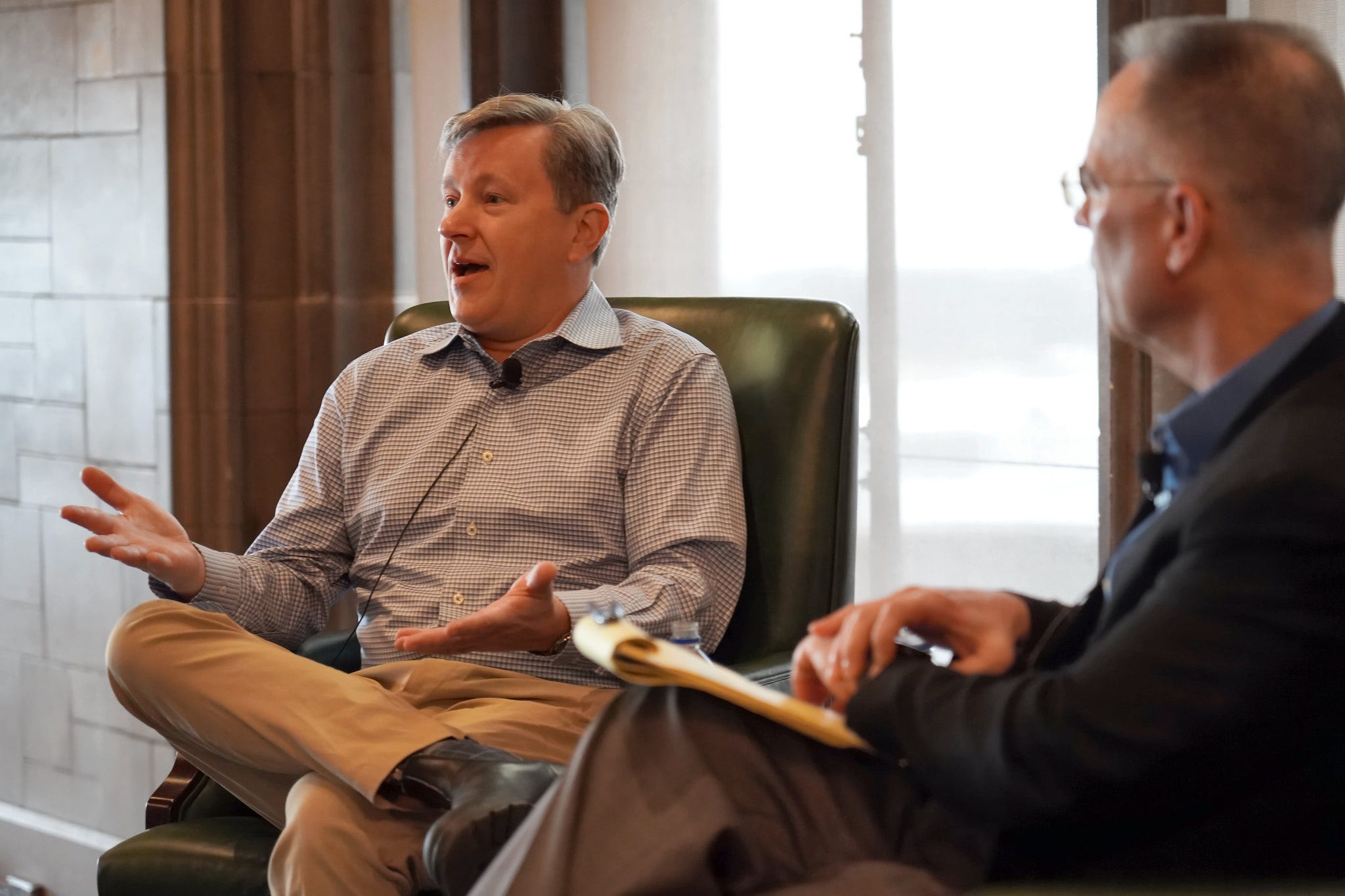
Get your hands on the cash flow. Scott Miller of Greenhaven Road Capital closed the summit with Rhys Summerton of Milkwood Capital and Rudi van Niekerk of Desert Lion Capital. Summerton: “activism from our point of view is getting our hands on the capital. We want our hands on the cash flow to allocate it.” One of his favorite signs of neglect is how few shares vote at the annual meeting.
How to hear every session
Each session gets its own post, and we will send the highlights by email on Wednesdays and Sundays. Ideas from the Room comes first, tommorrow.
I look forward to seeing many of you at future Latticework summits.
Best wishes,
John
This publication and the Latticework 2026 sessions are provided for informational purposes only and do not constitute investment advice. Errors are possible. Readers should conduct their own research.